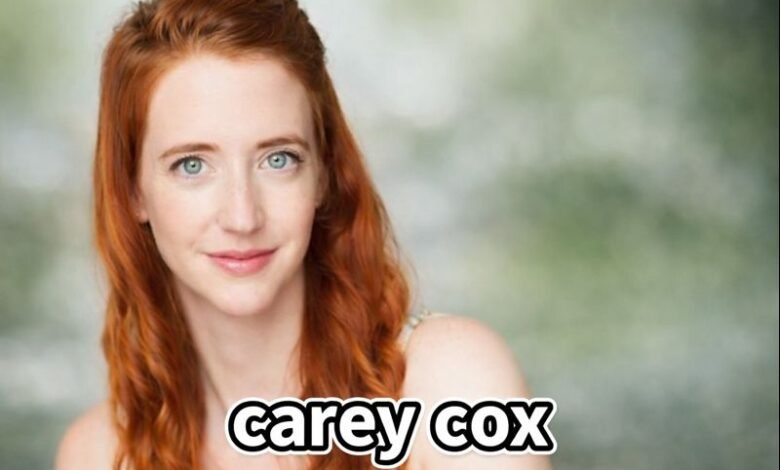
In a world where the entertainment industry is gradually evolving toward greater inclusivity, Carey Cox stands out as an actress who not only embraces her disability but has also become a powerful advocate for authentic disability representation. Known for her role as Rose Blaine in The Handmaid’s Tale, Cox’s career is defined by resilience, passion, and an unwavering commitment to challenging industry norms. Through her work, she’s reshaping the way disability is portrayed in Hollywood. This article takes a deep dive into Carey Cox’s inspiring journey, the obstacles she’s faced, and her vision for a more equitable entertainment landscape.
The Journey to Acceptance and Advocacy
Carey Cox’s journey into the world of acting wasn’t a conventional one. Diagnosed with Ehlers-Danlos Syndrome (EDS) in her early twenties, she initially struggled with the decision of whether to reveal her disability. EDS, a genetic connective tissue disorder, affects joints, skin, and blood vessels, and its symptoms can vary from joint pain to hypermobility. Despite these challenges, Cox chose to embrace her disability, deciding not to hide it as many in the industry might expect.
In an environment where actors with disabilities are often marginalized or forced to mask their conditions, Cox’s decision was a brave one. Rather than conforming to the industry’s expectations of beauty and normalcy, she began auditioning with her mobility aids, such as a cane. This decision paid off when she secured the role of Laura Wingfield in The Glass Menagerie, a role historically written for a character with a disability. Cox’s portrayal of Laura was deeply personal, allowing her to embody a character who shared her lived experiences, while also marking a milestone in her career as a disabled actress.
Building a Career on Resilience and Authenticity
Cox’s journey into mainstream theater was far from easy. As a fresh graduate from her MFA program, she moved to New York City, determined to pursue her passion for acting. However, her disability became increasingly difficult to hide. Her cane, once tucked away during auditions, began to reveal the realities of living with EDS, and this caused her to face the harsh truth about the industry’s perception of disabled actors. As the years went by, Cox found herself at a crossroads. Her disability was becoming more noticeable, and casting directors began asking questions that ultimately led her to reveal her condition.
Rather than being discouraged, Cox leaned into her identity as a disabled performer. She found a sense of community with other disabled actors and advocates and sought out opportunities that celebrated disability, not as a hindrance but as a natural part of her identity. The breakthrough came when Cox auditioned for The Glass Menagerie, where she was cast as an understudy for the role of Laura. This marked the beginning of her deep involvement in the disabled actors’ community and helped her establish relationships with agents and casting directors who valued her as a talented performer, not just as a disabled individual.
A New Era of Disability Representation in Film and TV
Carey Cox’s role in The Handmaid’s Tale as Rose Blaine—a character written with a disability—further cemented her as a key figure in the push for better representation of disabled characters in television. Rose, who has congenital hip dysplasia and uses a cane, is portrayed with authenticity, reflecting the reality of many people who live with disabilities. Unlike most characters with disabilities, who are often portrayed as either tragic or inspirational, Rose was complex, nuanced, and—most importantly—relatable.
Cox’s portrayal was a breath of fresh air in an industry where disabled characters are often sidelined or tokenized. Through her work, she has been able to challenge the stereotypes of disability in media, urging the industry to cast disabled actors in roles that are true to their experiences. In an era where diversity is more important than ever, Cox’s advocacy has become a driving force in the push for inclusivity in Hollywood.
Challenging the Status Quo and Breaking Stereotypes
While the industry has made some strides in terms of diversity, disabled actors are still often confined to specific roles that reflect their disability, reinforcing stereotypes that can limit their career opportunities. Carey Cox, however, believes that disabled actors should be able to take on any role, not just those written for disabled characters. Her advocacy is rooted in the idea that talent should be the primary criterion for casting, not disability.
Cox’s work, both on and off-screen, aims to dismantle the limiting beliefs surrounding disabled actors. She believes that the industry must shift its perspective and allow disabled actors to play a variety of roles, from romantic leads to action heroes, just like their non-disabled counterparts. By advocating for these changes, she has become an example of what is possible when the industry embraces true inclusivity.
Looking to the Future: Carey Cox’s Vision for Change
As Carey Cox prepares for the next chapter of her life with the arrival of her first child, she continues to advocate for systemic change within Hollywood. Her experiences have not only shaped her as an actress but also as an advocate for those who face similar struggles. She envisions a future where disabled actors are seen as versatile, talented performers who can take on any role, without their disability being the defining factor.
With her upcoming lead role in the indie film Where Did the Adults Go?, where she plays Cynthia, a character who uses a wheelchair, Cox is once again breaking boundaries. This role, like her past ones, highlights the importance of seeing disabled individuals in complex, multidimensional roles. As more opportunities arise for disabled actors, Cox hopes that the industry will continue to evolve and create a more equitable platform for all performers, regardless of their physical ability.
Conclusion
Carey Cox’s journey from a struggling actor to a powerful advocate for disability representation in Hollywood is nothing short of inspiring. Her commitment to authenticity, her resilience in the face of adversity, and her dedication to breaking down barriers for disabled actors have made her a trailblazer in the entertainment industry. As Hollywood continues to evolve, Cox’s work will undoubtedly leave a lasting impact, ensuring that disabled actors are no longer an afterthought but an essential part of the industry’s future. For more insights on groundbreaking artists like Carey Cox, stay tuned to Techmetra, where we explore the intersections of technology, creativity, and culture.
FAQs
- Who is Carey Cox?
Carey Cox is an actress known for her role in The Handmaid’s Tale and for her advocacy work in promoting disability representation in entertainment. She has Ehlers-Danlos Syndrome and uses her platform to challenge stereotypes about disabled actors. - What is Ehlers-Danlos Syndrome (EDS)?
Ehlers-Danlos Syndrome is a genetic disorder affecting connective tissue, causing symptoms such as joint pain, hypermobility, and skin fragility. Cox was diagnosed with EDS in her twenties. - What role did Carey Cox play in The Glass Menagerie?
Carey Cox played Laura Wingfield, a disabled character, in the Broadway revival of The Glass Menagerie. She was originally an understudy before eventually performing the role at the Guthrie Theater. - What is Carey Cox’s advocacy focus?
Carey Cox advocates for authentic disability representation in Hollywood. She pushes for the inclusion of disabled actors in a variety of roles, not just those written for disabled characters. - What is Carey Cox’s upcoming project?
Carey Cox stars in the indie film Where Did the Adults Go?, where she portrays Cynthia, a complex character who uses a wheelchair, highlighting the importance of diverse disability representation in film.